The Holy Unction service of Holy Wednesday, as prescribed in the typika of the Church, is not simply an act of distributing blessed oil, but a corporate sacramental event of the Church gathered in repentance and healing. Its meaning is ecclesial, liturgical, and deeply theological.
1. Why do those present benefit
The unction service is grounded in Epistle of James 5:14–15: “Is anyone among you sick? Let him call for the presbyters of the Church…” Several key principles emerge:
a. Presence within the gathered Body
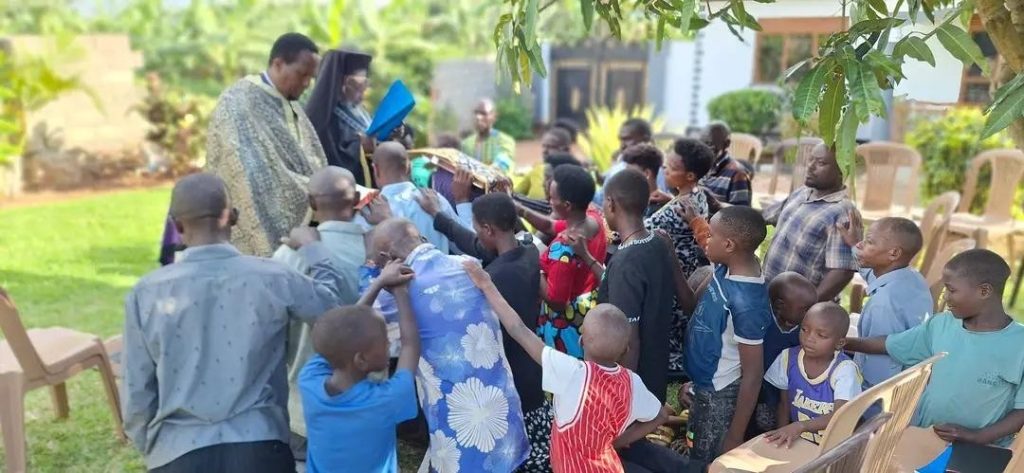
Holy Unction is not a private blessing but an act of the Church assembled as the Body of Christ. Healing is mediated not only through the oil, but through: the seven prayers, the seven Gospel readings, the laying on of hands (implicitly through anointing) and the communal repentance of all present
Thus, those physically present participate in: the prayers offered for all and the grace invoked upon the gathered community. The grace is not “contained” in the oil alone; it is activated within the liturgical event.
b. Synergy of prayer and participation
Orthodox sacramental theology emphasizes synergia (cooperation): God acts through grace and the faithful respond through presence, repentance, and faith
Absence, therefore, is not merely physical; it is a lack of participation in the liturgical synergy.
c. The sacrament as event, not object
The benefit comes from the event of the mystery (μυστήριον): hearing the Word, standing in repentance and being anointed in the context of prayer
The oil is a vehicle, but the sacrament is the whole liturgical action.
2. Why do those absentees not receive the same benefit
This is not a denial of God’s mercy toward the absent, but a clarification of how the sacrament operates.
a. The Church heals as a gathered organism
In Orthodox understanding, grace is not individualized in isolation.
The healing of Holy Unction is: ecclesial (of the Church), relational (within the Body) and sacramental (through participation)
To be absent is to step outside the immediate sacramental context, even if one remains spiritually connected.
b. Distinction from private devotion
Unlike personal prayer or blessed items (like holy water), Holy Unction is not primarily: a take-home blessing nor a distributable sacramental commodity. It is a liturgical encounter, not a devotional object.
c. Economy (οἰκονομία) vs norm
In cases of illness, priests may bring Unction to the sick. But this is: pastoral economy, not the normative form and still performed by clergy, with prayers, not simply by giving oil
3. Why the oil is not administered by lay persons at home
a. The oil is consecrated within a sacramental rite
The oil used in Holy Unction is: blessed through specific prayers of consecration and inseparable from the presence of the presbyter (priest). The priest acts in persona ecclesiae (in the person of the Church), not privately.
b. Apostolic mandate of presbyters
Again from The Epistle of James: “Let him call for the presbyters (πρεσβυτέρους)…” The authority to anoint sacramentally belongs to: ordained clergy and acting within the Church, not because lay persons lack holiness, but because: sacramental authority is ecclesial and ordered
c. Avoidance of magical or material reduction
If oil were taken home and applied independently, the sacrament risks being reduced to a material substance rather than a liturgical mystery. Orthodoxy guards against any notion that “the oil itself heals apart from the prayer of the Church.”
d. Typikon discipline
The typika of the Church emphasize: the structured, communal celebration, the role of clergy and the unity of prayer, Word, and anointing. This preserves doctrinal clarity, liturgical integrity and ecclesial order (τάξις)
4. Take home
Holy Wednesday Unction reveals that in truth, Healing is not a commodity, Grace is not transported as an object, The Church is not an abstraction, Rather Healing happens when the faithful stand together, hear the Word, repent, and are anointed within the living Body of Christ.
Those present receive the fullness because they are within the act, within the prayer and within the Body in motion. Those absent are not excluded from God’s mercy, but they are not participating in that concrete sacramental moment.
5. The Typikon of Holy Wednesday Unction
According to the received typikon of the Great Church of Constantinople:
a. Structure of the Mystery
The service includes: Seven Epistles, Seven Gospel readings, Seven prayers of blessing the oil and Anointing of all present. The number seven signifies: fullness, completion and total healing (body, soul, and spirit), thus, the service itself is a complete sacramental cosmos.
b. Placement in Holy Week
Holy Unction is placed on Holy Wednesday evening, within the movement toward: the Mystical Supper (Thursday), the Cross (Friday) and the Resurrection (Pascha).
It is therefore a preparatory healing and a cleansing before entering the Passion hence preparing the faithful physically: for repentance, for Eucharistic participation and for union with the suffering Christ
c. The center is the Gospel book
In the rite, the Gospel is placed centrally, amidst: wheat, oil and candles which shows that: healing flows from the Word incarnate and Christ Himself is the Physician. The oil is not central; Christ is.
6. Patristic Insight on Healing and Presence
St. John Chrysostom emphasizes that: the Church heals through gathering; salvation is not solitary but ecclesial. He teaches that the faithful are: “not saved alone, but as members of a body.”
Thus, absence is not only missing a ritual but the ritual is missing: the common prayer and the shared healing.
St. Basil insists on: order (τάξις) in the Church, the distinction between: ordained ministry and lay participation.
Not as hierarchy of worth, but as: harmony of function. Thus, the priest does not anoints as an individual, but as the visible hand of the Church acting sacramentally.
c. Healing as repentance
The Fathers consistently teach that: Sickness is not always caused by sin but healing always includes repentance. Therefore, the service repeatedly prays: for forgiveness, for restoration and for reconciliation. This is why all present are anointed and not only those who are physically sick.
7. Why “taking oil home” distorts the mystery
Here we must be very clear theologically.
a. Distinction: blessed oil vs sacramental oil
Orthodoxy allows: use of oil from vigil lamps (κανδήλι), personal devotional practices but Holy Unction oil is: sacramental and consecrated for a specific liturgical act.
It is not interchangeable with: general blessings nor private devotions.
b. The danger of “detached sacramentality”
If lay persons take the oil and apply it privately, the sacrament is detached from its liturgical context and grace is reduced to substance without prayer.
This risks a subtle shift toward: materialism (the oil itself heals) or even magic (automatic effect). The typikon prevents this by insisting that the oil must remain within the sacramental act of the Church.
c. The role of the priest
The priest proclaims the Gospel, prays the epiclesis (invocation of grace) and anoints in the name of the Church. Without this, the act is no longer the Mystery of Holy Unction.
8. Pastoral Exceptions (Economy)
The Church, however, is not rigid.
a. Visiting the sick
A priest may, bring oil, perform the prayers and anoint the sick at home or hospital but note: the full structure is preserved as much as possible and it is still a liturgical act, not private handling
b. Communion with the absent
Those absent may still receive: prayers of the Church and remembrance in intercessions but this is different from direct sacramental participation.
9. The deeper theological vision
Holy Unction on Holy Wednesday reveals profound mystery about the Church: as Christ heals, not by distributing objects but by gathering persons. The oil signifies: mercy, compassion and the soothing of wounds but the true healer is: Christ present in His Body, the Church.
Thus: Presence = participation in the healing Body, Absence = distance from the liturgical act, Priesthood = ordered service of grace and Oil = sign within the mystery, not the mystery itself.
10. Final lesson
In the spirit of the typikon, we may say: The oil does not travel without the Church. The grace does not act without the prayer. The healing does not occur without the Body.
And therefore, On Holy Wednesday, those who stand, hear, repent, and are anointed
do not simply receive oil, but they enter into the healing movement or journey of Christ
on His way to the Cross.
References
Primary: The Lenten Triodion. Translated by Mother Mary and Archimandrite Kallistos Ware. London: Faber & Faber, 1978.
Euchologion to Mega. Athens: Apostoliki Diakonia, various editions.
Patristic: John Chrysostom. Homilies on the Epistle of James. Basil the Great. On the Holy Spirit.
Modern: Schmemann, Alexander. For the Life of the World. Crestwood, NY: SVS Press, 1973. Ware, Kallistos. The Orthodox Church. London: Penguin, 1993.